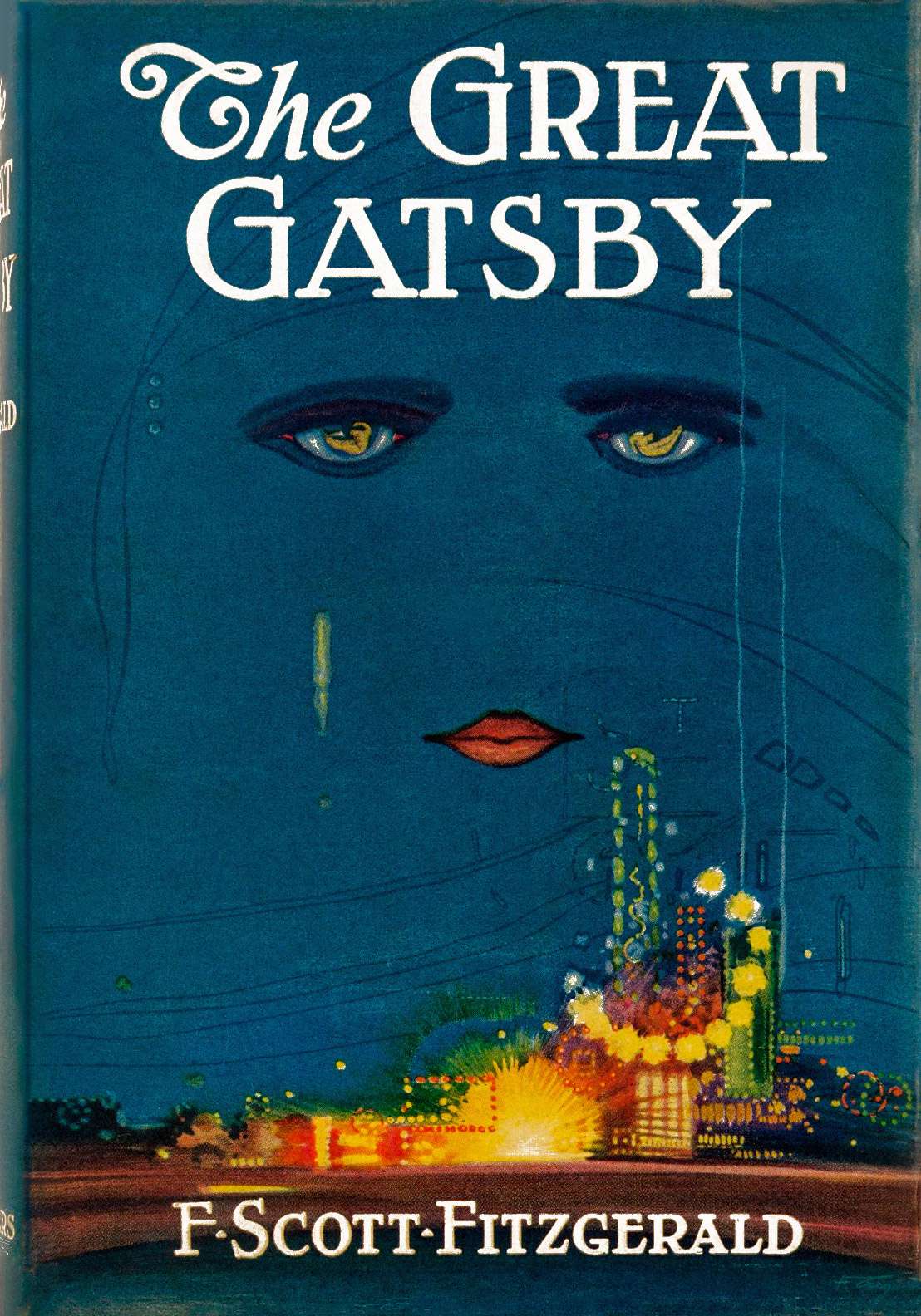
I did not, actually, read F. Scott Fitzgerald’s The Great Gatsby immediately after Swordspoint, but I promised to end this batch of updates on a positive note, so I’m moving this post out of chronological order.
Yes, somehow I got through an American education without having ever read The Great Gatsby. I’d been meaning to, especially after Readercon this year. When our local theater sent me an email saying that a ballet adaptation of Gatsby was coming last month, I decided to give myself a hard deadline by buying tickets.
Unfortunately, I hated every single minute of reading this book—which I did twice, as I do for many books, and especially ones I want to be sure I’m giving a fair shake. Everyone in it is horrible; it’s crashingly obvious in a really tedious way; the plot makes no sense whatsoever; and the narrator is deeply oblivious to his own faults and never changes. (You know I love an unreliable narrator! But it turns out that I need the unreliability to matter; I’m not even sure that the book realizes that Nick is unreliable.) I do recognize that people find the prose beautiful, but it did not click for me.
It was an interesting experience because, like Les Misérables and Moby-Dick, I somehow did not know the ending going in. I knew that it was about rich people, class differences, and the narrator being a fish out of water; and—because of two of the many books that have been released since it went into the public domain—one character could be interpreted as maybe not white and the narrator could be interpreted as maybe queer. Which definitely flagged for me every time Jordan’s skin is described as brown (many) and that extremely remarkable ellipsis: "… I was standing beside his bed and he was sitting up between the sheets, clad in his underwear, with a great portfolio in his hands."
Finally, the reason I said up front that I didn’t read this right after Swordspoint is that its "these people are bad, the end" reminded me of that book, possibly because Kushner had said she liked Gatsby at Readercon. To be clear, however, Swordspoint has a morally coherent view of why its bad people are bad, which is not something I would say about Gatsby.