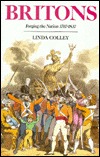
 Since Jonathan Strange & Mr Norrell is, in part, about the hierarchies and inequalities of British society, I asked the Internet for a social history of Britain during this time period and was recommended Linda Colley’s Britons: Forging the Nation 1707-1837.
Britons starts with the Act of Union that joined Scotland with England and Wales and ends with Queen Victoria’s accession, particularly emphasizing the last fifty or so years of that time. It argues that during this period, people in Great Britain [*] formed a British identity that supplemented existing identities. This was the result of multiple factors, including being a Protestant island threatened by Catholic invaders, actual or potential; the pervasive importance of trade; reaction to losing the American war; and the changes wrought by widespread military mobilization that allowed limited increases in participation in public life for men and women.
[*] Not the United Kingdom; this is not a book that attempts to grapple with Ireland, except to discuss Catholic emancipation. Relatedly, this is not a book concerned with the morality of imperialism.
I read this like the homework it is, skimming for the important bits (and making extremely, extremely brief notes to myself summarizing each chapter, which I’m putting behind the jump). It seemed readable to a non-historian, and puts a useful emphasis on primary sources such as popular political art and government surveys; because of the way I read it, I can’t really say whether the level of detail was illuminating or excessive.
At any rate, a useful overview for my purposes, and as relevant today as it was in 1992, when the first edition was published (there’s a 2009 revised edition, which was not the one I had library access to). Colley is still writing about this topic: see her archive at The Guardian.
Continue reading “Colley, Linda: Britons: Forging the Nation 1707-1837“
 Mike Rapport’s The Napoleonic Wars: A Very Short Introduction is another book I read in prep for the Jonathan Strange & Mr Norrell reread. And it lives up to the title and was just what I needed. I won’t remember the ebb and flow of the war, but I’ll be able to look things up for quick context when I need to; and more importantly, the book gave me the big-picture political context, which may not turn out to be directly useful to this reread but was interesting all the same.