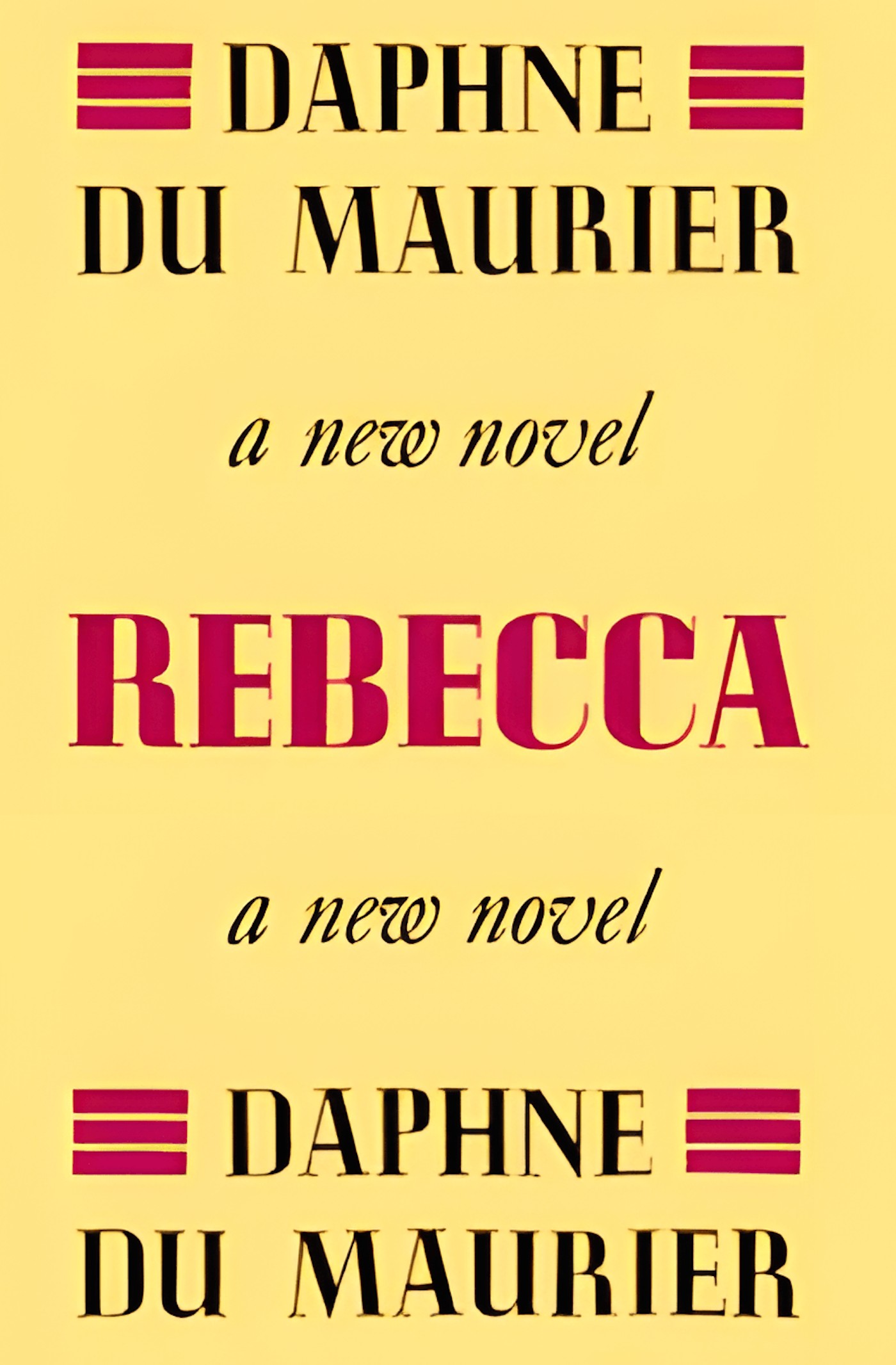
I had so much fun reading Daphne du Maurier’s Rebecca, for multiple reasons. First, there’s the prose, starting with the famous opening:
Last night I dreamed I went to Manderley again. It seemed to me I stood by the iron gate leading to the drive, and for a while I could not enter, for the way was barred to me. There was a padlock and a chain upon the gate. I called in my dream to the lodge keeper, and had no answer, and peering closer through the rusted spokes of the gate I saw that the lodge was uninhabited.
No smoke came from the chimney, and the little lattice windows gaped forlorn. Then, like all dreamers, I was possessed of a sudden with supernatural powers and passed like a spirit through the barrier before me. The drive wound away in front of me, twisting and turning as it had always done, but as I advanced I was aware that a change had come upon it; it was narrow and unkept, not the drive that we had known. At first I was puzzled and did not understand, and it was only when I bent my head to avoid the low swinging branch of a tree that I realized what had happened. Nature had come into her own again and, little by little, in her stealthy, insidious way had encroached upon the drive with long, tenacious fingers. The woods, always a menace even in the past, had triumphed in the end. They crowded, dark and uncontrolled, to the borders of the drive. The beeches with white, naked limbs leaned close to one another, their branches intermingled in a strange embrace, making a vault above my head like the archway of a church. And there were other trees as well, trees that I did not recognize, squat oaks and tortured elms that straggled cheek by jowl with the beeches, and had thrust themselves out of the quiet earth, along with monster shrubs and plants, none of which I remembered.
If you don’t like that, you won’t like the book; it’s full of that kind of lush description, which I positively reveled in, but certainly won’t be to everyone’s taste.
The next thing I enjoyed is how unreliable and ambivalent the narrator is. In Chapter 2, she tells us, "We have no secrets now from one another. All things are shared." That is, however, sandwiched in between two statements that directly contradict this claim: first, "He is wonderfully patient and never complains, not even when he remembers… which happens, I think, rather more often than he would have me know," and second, "I had learned my lesson. […] in future keep the things that hurt to myself alone. They can be my secret indulgence." In the same chapter!
Then there’s the way I didn’t know what kind of story we were in until quite a long way into the book. I knew it was a Gothic, of course. But was it a supernatural kind of Gothic? A murdery one? Were the Jane Eyre vibes more than just vibes? I simply did not know, and it was delightful.
And when the plot became clear, there was still a lot of tension: though we know where the story ends up, because it’s a retrospective narration, how we were going to get there was far from evident.
Finally, the whole thing is amazingly melodramatic in a very tightly interwoven and deliberate yet absolutely unhinged way. The amount of caps-lock and wild gestures I would like to do about it! The way I wanted to pull random people off the street and say, "Can you believe this?!!??!"
In short: it’s very fun, you should read it.
Minor notes:
- Chalk this up along with The Great Gatsby as books in which WWI seems like it ought to be much more of a presence than it is, at least textually.
- It is extremely homoerotic. It’s very easy to read it as homophobic, but then again none of them are healthy, so I don’t know that it’s singling the arguably-queer characters out in this respect.
- There is also a lot of gender in this book. That’s just an observation, I don’t have any conclusions about it.